
Vinyl Fencing in Medford, Oregon
Privacy and picket fences that never need paint or stain.
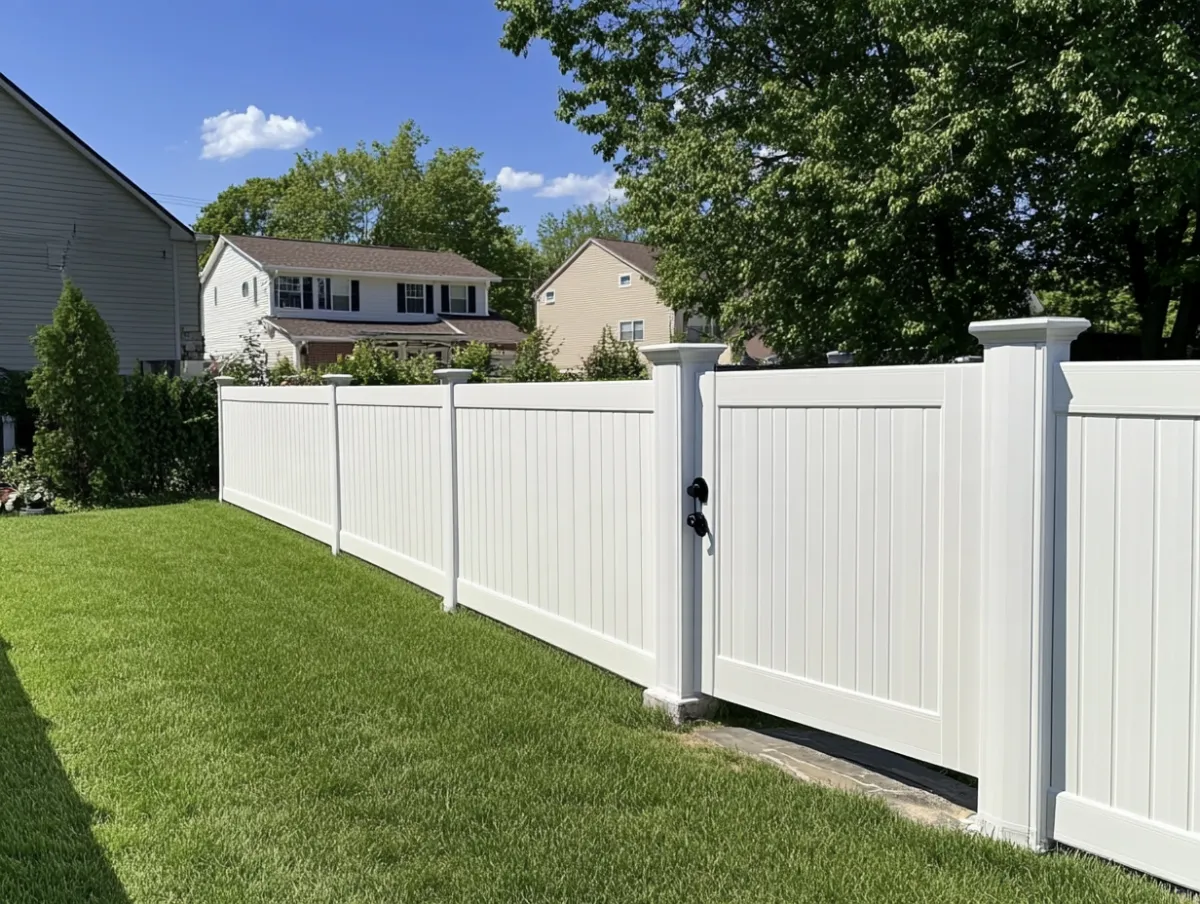
Vinyl is the fence for people who are done with maintenance. No staining every few summers, no rotting posts, no splinters, no peeling paint. A good vinyl fence looks about the same in year fifteen as it did the day it went in, which is a big part of why it's become so common in newer neighborhoods around Central Point and in east Medford. It does cost more up front than wood. But once you add up the stain, the labor, and the post replacements a wood fence needs over its life, the gap closes fast. We install new vinyl fences across Jackson County and repair existing ones, including the cracked panels and blown-out sections that tend to show up after a storm or a stray tree limb.
Below, we cover the signs your vinyl fence needs repair, what separates a quality vinyl fence from a cheap one, how we install it so it holds up to our heat, and how vinyl compares with wood over the long run. It's worth reading before you compare quotes, since two vinyl fences that look alike can be built very differently. If wood is more your style, our fence installation page covers cedar and other options.
Signs Your Vinyl Fence Needs Repair
Vinyl doesn't rot, but it can still fail. Look for cracked or split pickets and panels, especially near the bottom where string trimmers and lawn mowers hit them.
Check for rails that have popped out of their post brackets. This often happens after a hot spell, when the vinyl expands, or after strong wind pushes on a solid privacy panel.
Push on the posts. A leaning vinyl post almost always means the footing underneath has moved, since the post itself doesn't break down.
Watch for sagging bottom rails on long sections. That's usually a sign the rail was never reinforced.
And look at the gate. Vinyl gates are lighter than wood but still need a solid post and a metal frame inside to keep them from sagging and dragging over time.
What Separates Good Vinyl from Cheap Vinyl
Vinyl fencing is made from PVC, and the quality varies a lot. Better vinyl uses thicker walls and is made with UV inhibitors, usually titanium dioxide, that protect it from yellowing and turning brittle in the sun. That matters here, where summer afternoons regularly push past 100 degrees.
Look for reinforced bottom rails. Long privacy panels need an aluminum or steel insert in the bottom rail so they don't sag in the middle.
Posts should be set in concrete. Some vinyl posts get a steel insert or a concrete fill at gate and corner locations for extra strength.
Color matters too. White and lighter tans hold up best in strong sun. Darker vinyl absorbs more heat, expands more, and can fade faster.
Finally, ask about the warranty. Most reputable vinyl manufacturers back their fence material for decades, often for the life of the original owner.
How We Install a Vinyl Fence
- Site visit and written estimate. We measure, talk through height, style, and gates, and give you a clear price.
- Layout and utility locate. We call 811, then mark the line with stakes and string.
- Post setting. Posts go in concrete, plumb and spaced exactly to the panel width, since vinyl panels don't get cut to fit the way wood boards do.
- Panels and rails. Rails are set into the posts with room to expand and contract as the temperature swings, which keeps them from popping out in August.
- Gates and caps. Gates are hung on reinforced posts, and post caps go on last.
Most vinyl fences take two to four days, plus curing time for the concrete.
Vinyl or Wood: Which One Fits Your Yard
Wood costs less to put in and has a warmer, more natural look. But it needs stain every few years, and posts and boards will eventually need replacing.
Vinyl costs more up front, often noticeably more than cedar. In exchange, you get a fence that needs only an occasional rinse with a hose and lasts 20 to 30 years or more.
There are a couple of trade-offs. A vinyl panel that cracks has to be replaced as a whole section rather than patched with a single board. And in a hard freeze, vinyl gets more brittle and can crack if something hits it.
If you plan to stay in your home for a long time and want to stop thinking about your fence, vinyl usually wins. If you might sell in a few years, cedar gets you a good-looking fence for less money.
If you'd rather keep a wood fence looking good instead, our fence and deck staining service is the best way to make it last.