
Fence Installation in Medford, Oregon
New fences laid out right, set deep, and built for Rogue Valley weather.
A new fence is one of those jobs where the parts you can't see decide how long it lasts. Two fences can look identical on the day they're finished. Ten years later, one is still straight and the other is leaning in three directions, and the difference is almost always how deep the posts went and what they were set in. We build fences across Jackson County, from privacy fences on tight lots in White City to longer property-line runs on the bigger parcels outside Phoenix. Each one gets laid out with string lines, checked against your property markers, and built on posts set in concrete deep enough to stay put through a soggy winter and a bone-dry summer. You'll get a written price before any of that starts, and a fence you won't have to think about for a long time.
Below, we cover what to settle before a fence goes in, how a fence is actually built to last, what the job looks like from layout to cleanup, and how to choose between wood, vinyl, and chain link. Knowing these basics makes it a lot easier to compare quotes. If you'd rather never paint or stain again, our vinyl fencing page covers that option in more detail, including how it handles our summer heat.
What to Decide Before a New Fence Goes In
Start with the reason. Privacy, keeping a dog in, keeping deer out, marking a property line, or just finishing off the yard. The reason drives the height and the style.
Next, height. Six feet is the common choice for backyard privacy. Front yards usually call for something lower, and Medford's zoning rules limit fence height near the street and at corners so drivers can see. A fence over 7 feet needs a building permit in Medford, or over 8 feet for chain link.
Then the property line. If you're not sure exactly where it is, find your survey pins or get a survey before building. A fence that ends up a foot onto your neighbor's land is an expensive mistake.
Last, check your HOA rules if you have one. Many specify materials, colors, and heights.
How a Fence Is Built to Last
The posts carry everything. For a 6-foot fence, we use 8-foot posts and set roughly a third of the post in the ground, usually about 2 feet or more depending on the soil. In the heavy clay around Medford, deeper is better.
Posts go in concrete, with the top of each footing shaped so water runs away from the wood instead of pooling against it. Wood posts are rated for ground contact, not the cheaper above-ground lumber that rots out early.
Rails get fastened with coated screws or ring-shank nails that won't rust through. For wood fences, we space boards to allow for the swelling and shrinking that comes with our wet winters and hot summers.
Before any digging, we call 811 so underground utility lines get marked. Oregon law requires that notice at least two business days ahead.
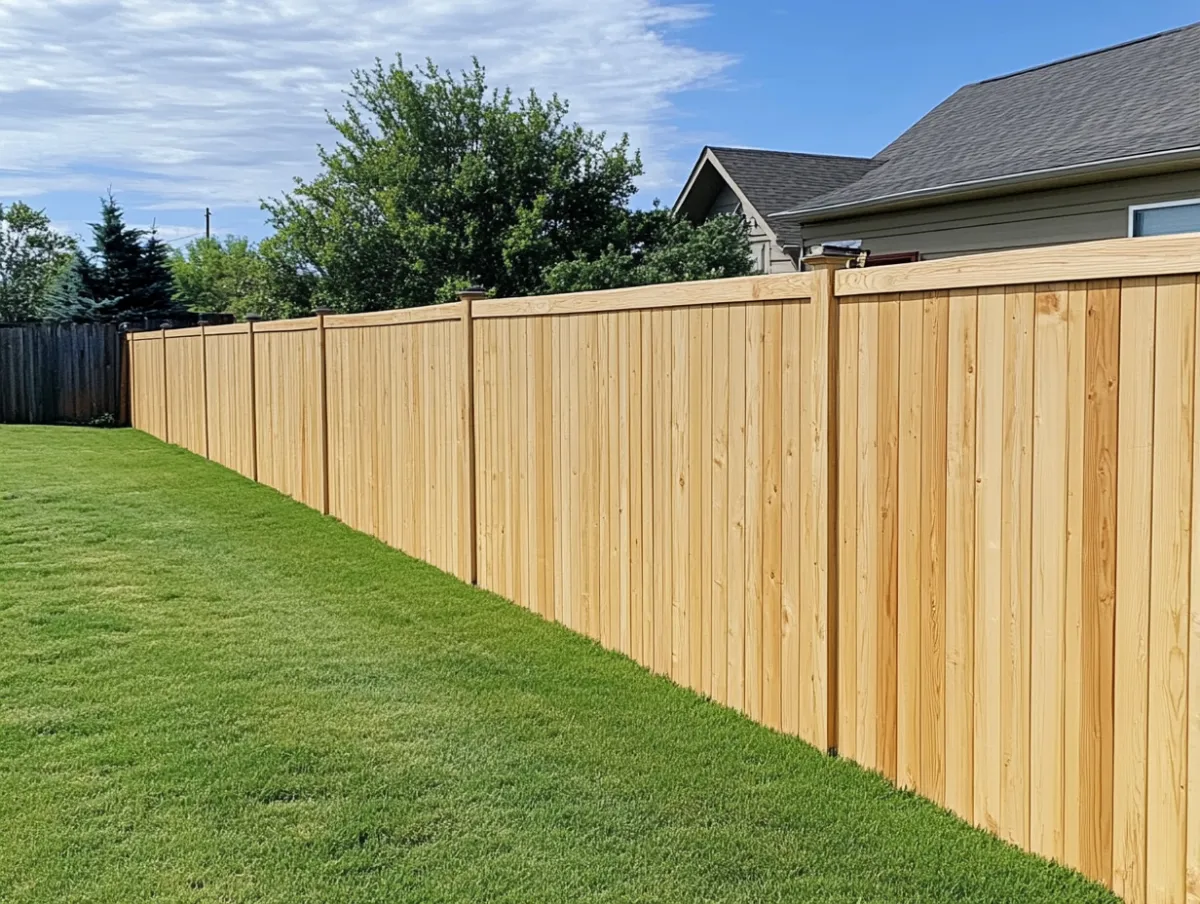
Our Fence Installation Process
- Site visit. We walk the line with you, measure, and talk about height, style, gates, and material.
- Written estimate. A clear price, the materials list, and a timeline.
- Utility locate and layout. We call 811, then mark the fence line with stakes and string.
- Post setting. Holes dug, posts set plumb in concrete, and the concrete left to cure, usually overnight, before any weight goes on the posts.
- Rails, boards, and gates. Everything checked for level and spacing as we go, so the top line stays clean even where the yard slopes.
- Cleanup. Dirt, scraps, and old fencing hauled away.
Most new residential fences take two to four days, depending on length, gates, and how rocky the ground is.
Wood, Vinyl, or Chain Link: Which One Fits
Cedar is the most popular fence in the valley. It looks good, takes stain well, and lasts 15 to 20 years when it's built right and stained every few years.
Vinyl costs more up front but needs almost no upkeep. No rot, no paint, no stain. It's a strong pick for anyone who wants to build a fence once and forget about it.
Chain link is the most affordable way to enclose a big area. It's tough, quick to install, and ideal for dog runs, back lots, and side yards where privacy isn't the point. Black vinyl-coated chain link blends into landscaping better than bare galvanized.
Budget, maintenance, and how the fence will be used usually settle it fast. We'll price more than one option if you're on the fence about which way to go.
A new fence usually means a new gate too, and our gates and gate repair page covers walk-through and driveway gates built to swing true for years.