
Fence and Deck Staining in Medford, Oregon
Clean, prep, and stain that protects your wood from the sun and the rain.
Stain is the cheapest way to make a wood fence or deck last longer. In the Rogue Valley, wood takes a beating from two directions. The long summer bakes it, pulls out its natural oils, and turns it gray. Then the winter rain soaks into the dried-out grain and starts the rot that eventually takes down posts, rails, and deck boards. A good stain slows both of those down. It blocks UV, keeps water from soaking in, and keeps the wood from checking and splitting. We stain fences and decks across Jackson County, from newer cedar fences in White City to older decks in Talent that haven't seen a fresh coat in years. Done right, a stain job can add years to the life of the wood.
Below, we cover how to tell when your wood needs stain, the different types of stain and what each one does, how we prep and apply it, and how often you should plan to restain. Most of the work in a good stain job is the prep, not the stain itself. If you find soft or damaged boards along the way, our deck repair page covers fixing those before the stain goes on.
Signs It's Time to Stain
The easiest test is water. Sprinkle a little on the wood. If it beads up, the old finish is still working. If it soaks in and darkens the wood within a minute or so, it's time to stain.
Color is the next clue. Wood that has turned silver gray has lost its protection and is starting to break down at the surface.
Look for small cracks along the grain, called checking, and boards that are cupping or splintering. Those are signs the wood is drying out and taking on water.
On a deck, look at the high-traffic spots first: near the door, the stairs, and under the grill. Horizontal surfaces wear much faster than a fence, so a deck will need stain before the fence around it does.
If you can see bare wood through an old stain, you're overdue.
Types of Stain and What They Do
Stains run from clear to solid, and the more pigment a stain has, the more it protects against sun.
Clear and toner finishes show off the wood grain but offer the least UV protection, so they wear off quickly in strong sun.
Semi-transparent stain is the most common choice for fences and decks here. It adds color, lets the grain show through, and gives solid UV protection. It also wears away gradually rather than peeling.
Solid stain looks more like paint and covers the grain. It hides weathered wood well and offers the most UV protection, but on a deck it can peel in high-traffic spots and is harder to redo.
Oil-based stains soak deeper into the wood. Water-based stains dry faster and clean up easier. Both can work well when the prep is right.
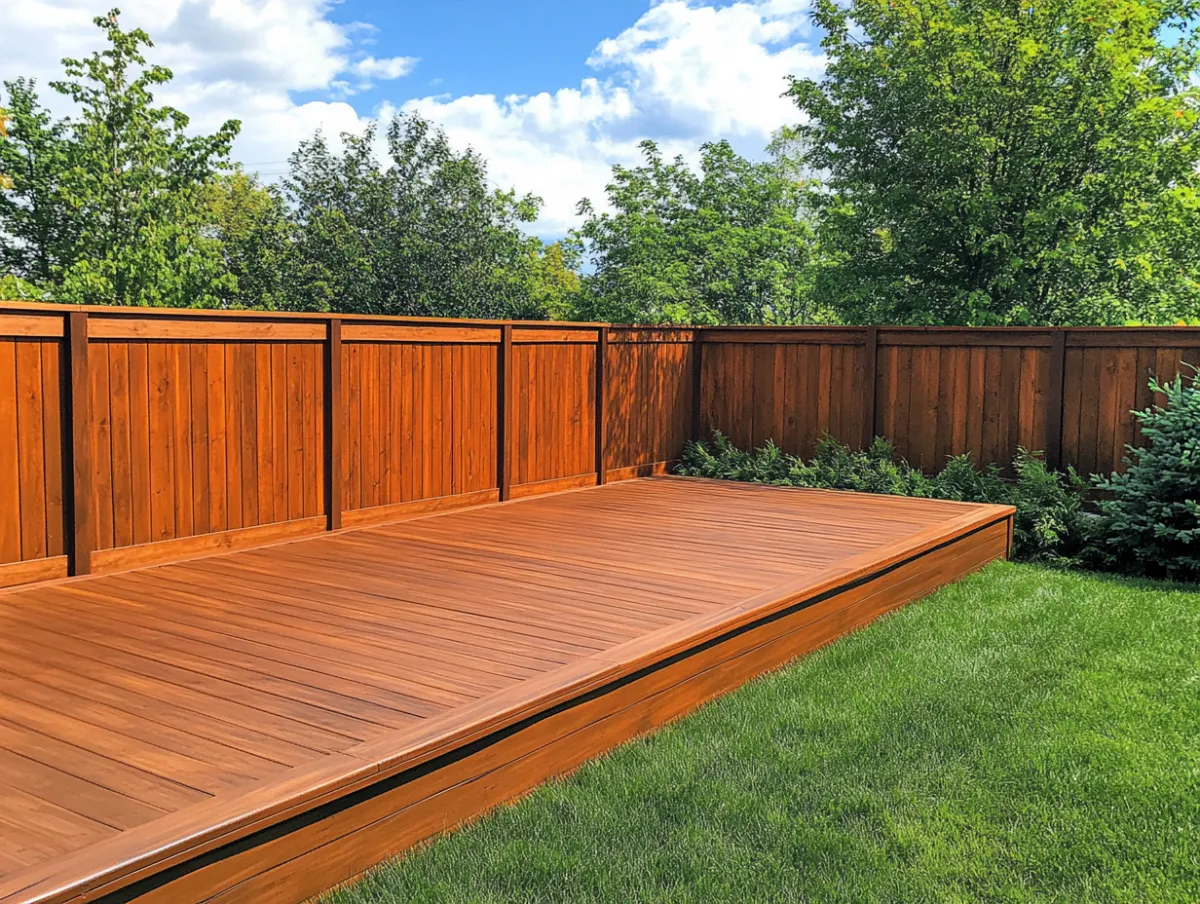
How We Prep and Stain
- Inspection. We check for loose boards, popped nails, and soft spots, and fix or flag anything that needs repair first.
- Cleaning. We wash the wood with a wood cleaner to remove dirt, mildew, and old gray fibers. If we use a pressure washer, it's at low pressure, since high pressure tears up the wood surface.
- Brightening and drying. A brightener restores the wood's color, and then the wood has to dry completely, usually a day or two.
- Staining. We apply the stain in even coats, working with the grain and back-brushing so it soaks in instead of sitting on top.
- Cleanup. We protect plants, siding, and concrete as we work, and clean up when we're done.
Staining needs dry weather, which in the Rogue Valley means late spring through early fall works best. We avoid the hottest afternoons in July and August, when stain can dry on the surface before it has a chance to soak in.
How Often to Restain
Plan on restaining a fence every three to four years with a semi-transparent stain. Fences are vertical, so rain runs off them and they wear more slowly.
Decks need it more often, usually every two to three years, because the sun hits them straight on and foot traffic wears the finish away.
New pressure-treated wood needs to dry out before its first coat, often a few months. Use the water test: when water soaks in instead of beading, the wood is ready.
Solid stains last a little longer between coats but are harder to redo when the time comes.
Waiting too long costs more. Once the wood is gray and checked, it takes more cleaning and more stain to bring it back.
If the boards are too far gone for stain to save, our fence repair page covers replacing the worst sections first.