
Fence Repair in Medford, Oregon
Leaning posts, broken boards, and sagging gates, fixed so they stay fixed.
Most fences don't fail all at once. A post starts to tip after a wet winter, a couple of boards crack in the August heat, and the gate stops latching unless you lift it. Then a windy afternoon pushes a whole section over into the neighbor's yard. We see it every week, from the older cedar fences in west Medford to the builder-grade fences that came with newer homes in Central Point, where the posts were set shallow to save time. The good news is that most of these problems are fixable. A failing post or two doesn't mean you need a new fence. It means you need the right fix in the right spot, done by someone who knows why it failed in the first place.
Below, we cover the signs your fence needs work, why fences in the Rogue Valley fail the way they do, how a repair job actually goes, and how to tell whether repair or replacement makes more sense. Most homeowners can spot the warning signs themselves in about ten minutes, walking the fence line with a cup of coffee. If the problem is mostly at the gate, our gate repair page goes deeper on hinges, posts, and latches.
Signs Your Fence Needs Repair
Start at the posts. Push on one near the top. If it moves more than an inch or two, the base is likely rotting or the footing has loosened. A fence line that's no longer straight when you sight down it, or that leans more each season, is telling you the same thing.
Next, look at the rails. These are the horizontal pieces the boards hang on. A rail that's cracked, pulled loose from the post, or sagging in the middle puts extra weight on everything around it.
Then the boards. A few split or missing pickets are cosmetic. Boards that feel soft when you press a thumbnail in are not. Soft wood means rot, and rot spreads.
Finally, the gate. Dragging, sticking, or a latch that won't line up almost always points back to a gate post that's moved.
Why Fences Fail in the Rogue Valley
Nearly every fence failure here starts in the ground. Much of Medford sits on heavy clay that holds water all winter and shrinks hard in the summer. A post set in that soil gets soaked for months, then squeezed and loosened as the ground dries out.
The weak point is right at grade, where wood, water, and air all meet. That's where rot starts, even on posts that look fine above ground.
Wood type matters too. Fence posts should be rated for ground contact. On treated lumber, that's an AWPA Use Category of UC4A or higher, stamped on the tag. Plenty of older fences used posts rated for above-ground use only, and those tend to give out in eight to ten years.
Concrete can help or hurt. A footing that's domed on top sheds water. One that's flat or cracked holds water against the post like a cup.
Our Fence Repair Process
- We look at the whole fence, not just the broken spot. One leaning post often means the two beside it are close behind.
- We find out why it failed. Bad drainage, the wrong post, a shallow footing, a gate that's too heavy for its post. The fix depends on the cause.
- We give you a written price for the repair, plus an honest note on anything else that's close to failing.
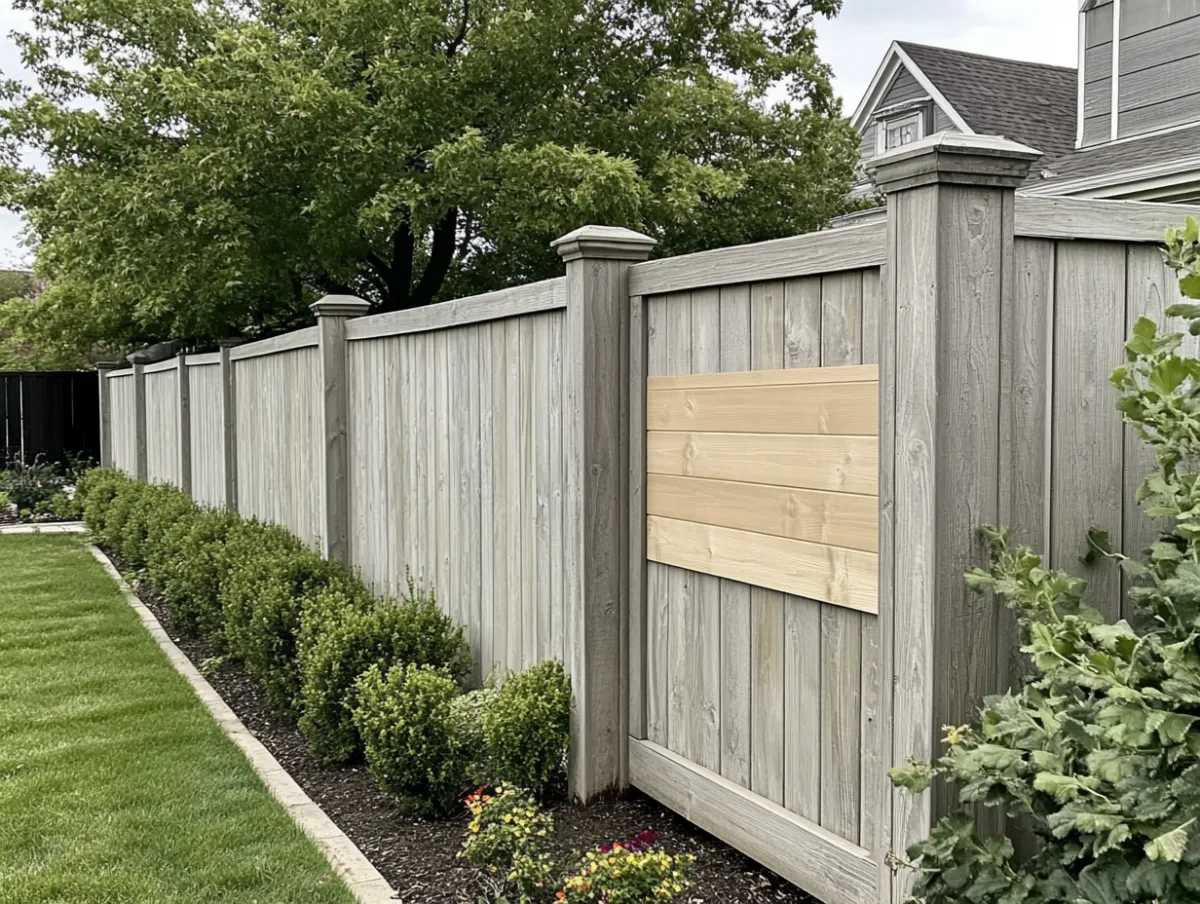
- We make the repair. That might mean digging out and resetting a post in fresh concrete, driving a steel post mender alongside a rotted base, replacing rails, or swapping out damaged boards to match the rest of the fence as closely as we can.
- We check that everything is plumb, tight, and swinging right before we leave, and we haul off the old wood.
Most repairs take a few hours to a day.
Repair or Replace: Which One Applies to You
Repair makes sense when the damage is limited. A few bad posts, a broken section after a storm, a sagging gate. If the rest of the fence is solid, fixing those spots buys you years.
Replacement starts to make more sense when about a third of the posts are leaning or soft, when the boards are gray and splitting along most of the run, or when the fence has already been patched several times. At that point you're paying for repair after repair on wood that's near the end of its life.
Age is a clue. A wood fence past 15 years in this climate usually doesn't have much left, especially if it was never stained.
In Ashland, we also see fences replaced for a different reason: a 4-foot fence that deer step right over. Sometimes the right answer isn't fixing the old fence, it's building a taller one.
If you're leaning toward a new fence instead, here's how we handle fence installation in Medford from layout to the final post cap.