
Chain Link Fencing in Medford, Oregon
New chain link fences and repairs for yards, dog runs, and back lots.
Chain link doesn't get much love, but it's hard to beat when you need a lot of fence that holds up. It won't rot, it won't warp in the summer heat, and it keeps dogs, kids, and wandering deer where they belong. That's why it's still everywhere in the valley, around backyards in Medford, on the larger lots out toward Eagle Point and the Highway 62 corridor, and along side yards in Phoenix where the goal is simple: keep things in, keep things out. We install new chain link and fix the old stuff, from bent top rails after a tree limb comes down to sagging fabric and gates that drag. A well-built chain link fence can easily last 20 years or more with almost no upkeep.
Below, we cover the signs your chain link needs attention, what separates a solid chain link fence from a flimsy one, how we install and repair it, and when it makes more sense to replace than repair. If your problem is a wood fence instead, our fence repair page covers posts, rails, and boards. And if the trouble is mostly at the gate, that's often a quick fix.
Signs Your Chain Link Fence Needs Work
The fabric is the first thing to check. Look for sagging between posts, spots where the mesh has pulled loose from the rail, or sections bowed out where a dog has been pushing for years.
Next, the top rail. A bent or kinked rail usually means something fell on it, and it leaves the fabric loose along that whole stretch.
Check the posts by giving each one a shove. A leaning corner or end post is a bigger deal than a leaning line post, since the end posts hold the tension for the entire run.
Look at the ties and bands, the small clips and metal straps that hold everything together. Missing ones let the fabric slip.
Finally, rust. A little surface rust on older galvanized fence is cosmetic. Rust that has eaten through the wire is a sign the fence is near the end, especially along the bottom where sprinklers hit it every day.
What Makes a Chain Link Fence Strong
Not all chain link is the same. The wire is measured in gauge, and a lower number means thicker wire. Nine gauge is the heavy residential standard. The thinner 11 or 11.5 gauge wire sold at many big box stores costs less but dents and stretches more easily.
Mesh size matters too. A standard 2-inch diamond works for most yards. Smaller mesh is harder to climb.
Then there's the frame. Terminal posts, meaning the corner, end, and gate posts, are larger and heavier than line posts because they carry the tension of the fabric. Tension bars and tension bands lock the fabric to those posts, and a top rail ties the whole run together.
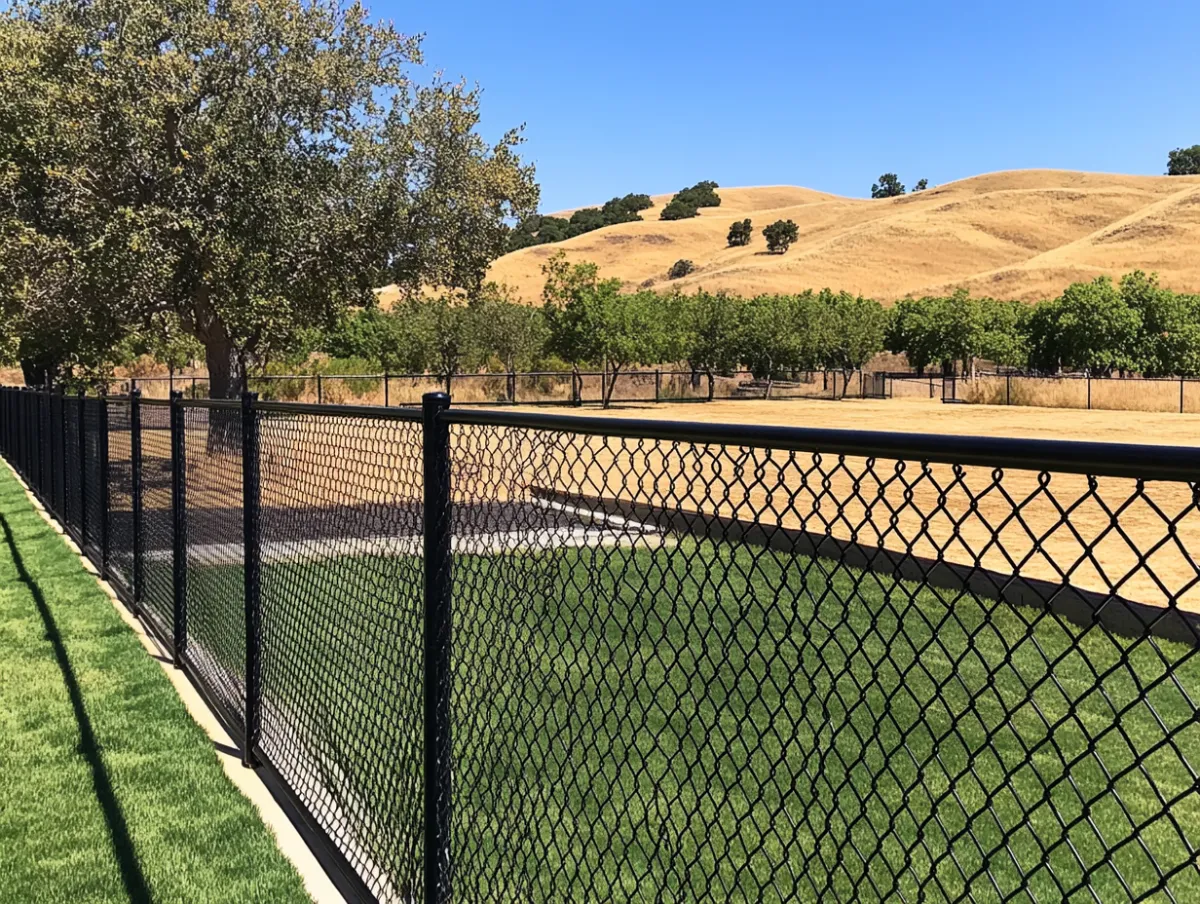
For finish, galvanized is the classic silver look. Black vinyl-coated chain link costs a bit more but blends into landscaping and adds another layer of protection against rust.
How We Install and Repair Chain Link
For a new fence, we start with a site visit and a written estimate, then call 811 so utility lines get marked before we dig. Terminal posts go in first, set in concrete, followed by the line posts. Once the concrete cures, we hang the top rail, stretch the fabric tight with a come-along, and tie it off every 12 to 24 inches.
For repairs, the fix depends on what failed. A bent top rail gets cut out and replaced with a new section. Sagging fabric gets re-stretched and re-tied. A leaning post gets dug out and reset in fresh concrete. Torn or rusted-through mesh gets spliced with a new piece of matching fabric.
Most chain link repairs take a few hours. A new residential run usually takes one to three days.
Repair or Replace Your Chain Link
Chain link is one of the most repairable fences out there. Because it's built from standard parts, a damaged rail, post, or section can usually be swapped out without touching the rest of the fence.
Replacement makes sense when rust has spread through most of the fabric, when several terminal posts have failed, or when the fence is too short for what you need now, like a 4-foot fence that a new dog can clear.
It's also worth thinking about privacy. If you've decided you want to block the view, privacy slats can be woven into existing chain link, though many homeowners end up choosing a different fence entirely. Either way, we'll walk the fence with you, price the repair and the replacement side by side, and let you pick.
If you need a gate that opens wide enough for a mower or a trailer, our driveway and walk-through gates page covers sizes, hardware, and how we keep them from sagging.