
Fence and Deck Work in Central Point, Oregon
Fixing and upgrading the fences that came with Central Point's newer homes.
Central Point has grown fast, and a lot of its fences went in fast too. Many of the newer neighborhoods, from Twin Creeks to the subdivisions along the east side of I-5, came with builder-grade fences: thin boards, posts set just deep enough to pass, and no stain at all. For the first few years they look fine. Then the wet winters and hot summers start to work on them. Sprinklers spraying the bottom boards every summer morning don't help either, and neither do the dogs that dig along the fence line looking for a way out. Posts loosen in the clay, unstained boards turn gray and cup, and whole sections start to lean toward the neighbor's yard. Ten years in, a lot of homeowners are looking at a fence that needs real attention, often all at the same time as everyone else on the street. When one neighbor replaces, the fence next to it tends to look worse by comparison, and the calls start coming in one after another.
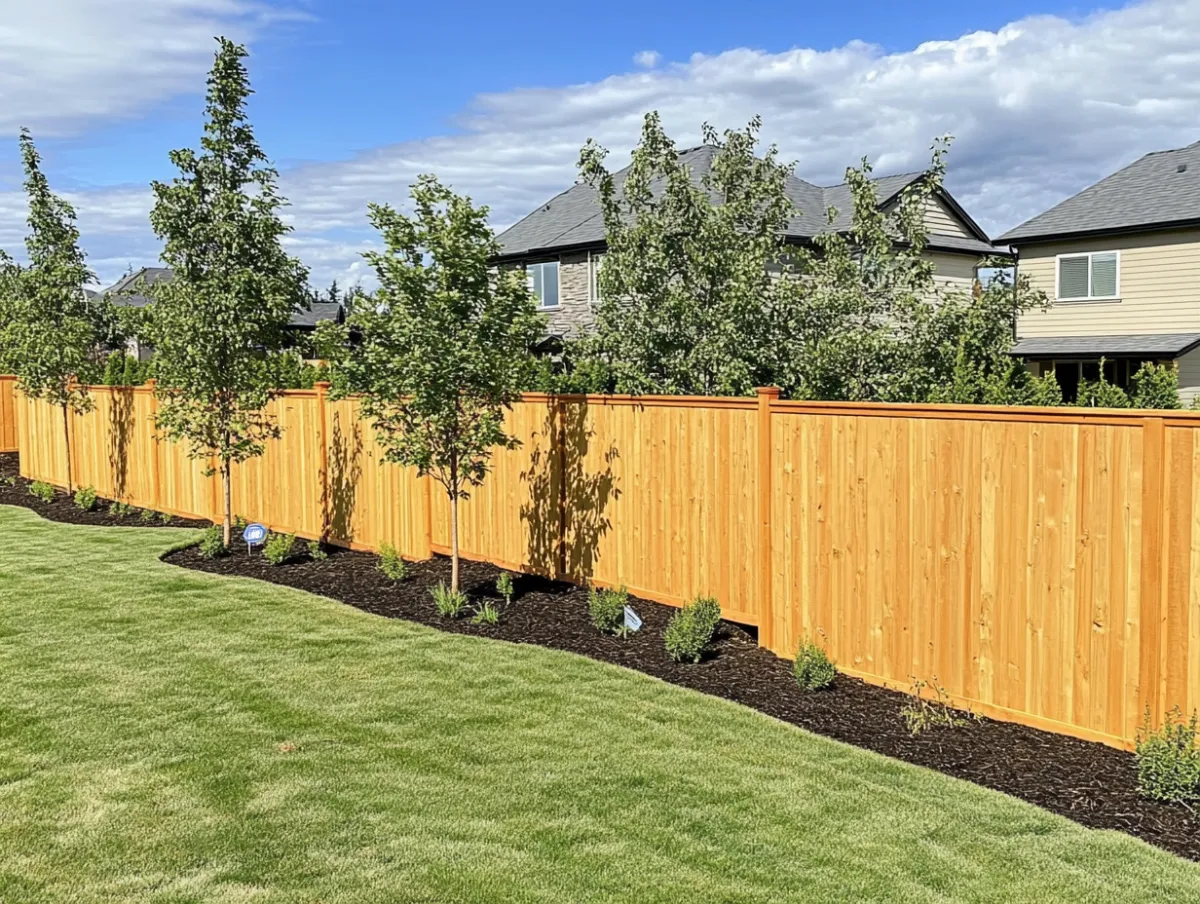
We help Central Point homeowners decide what's worth saving and what's worth replacing, and we're honest when the answer is a few hundred dollars instead of a few thousand. Often that's a few new posts and some fresh boards rather than a whole new fence. Other times it's the right moment to upgrade to cedar or vinyl. We also handle gates, decks, and the stain that builder fences never got. Call or send the form and we'll come out and give you a straight answer. Most Central Point repairs are done in a day, and we haul off the old boards and posts when we leave.
Builder-Grade Fences and How to Make Them Last
Most builder fences fail in the same order. First the posts, because they were set shallow and often without much concrete. Then the bottom rail, which sits closest to wet ground. Then the boards, which were never stained and dry out fast in the summer sun.
If your fence is still mostly straight, the smartest money usually goes into the posts. We reset or replace the ones that are moving, set them deeper in concrete, and swap out any rotted rails. Then a good semi-transparent stain on the whole fence, applied once the wood is clean and dry, slows down the graying and cracking. Done together, those two steps can add years to a fence that looked like it was headed for replacement.
If the fence is leaning in several places and the boards are soft, we'll tell you it's time to start over. In that case, many Central Point homeowners go with a new cedar or vinyl fence built on deeper footings, especially if they plan to stay put for a while.
Gates, Decks, and HOA Rules
Many Central Point neighborhoods have an HOA, and those rules often cover fence height, style, color, and even which side of the fence faces out. Before we build or replace anything, we ask for your HOA guidelines so the new fence passes review the first time. If you share the fence with a neighbor, it also helps to talk with them before work starts. Shared fences go a lot smoother when everyone knows the plan, the timing, and which side the finished face will be on.
Gates are another common call here. Side-yard gates on newer homes are often hung on the same light posts as the rest of the fence, so they sag within a few years. A heavier post, better hinges, and a proper brace usually fix it for good. Self-closing hinges are a popular add-on for families with dogs or young kids.
On the deck side, we build and repair everything from simple low decks off the back slider to larger decks with stairs. Homeowners just up the road in White City deal with a lot of the same newer construction, while those closer to Medford tend to have older fences that need more repair work.