
Deck Repair in Medford, Oregon
Soft boards, shaky railings, and rotting framing, fixed so your deck is safe to use again.
Decks wear out from the top and the bottom at the same time. Up top, the summer sun dries out the boards until they gray, crack, and splinter. Underneath, where nobody looks, rainwater sits on the joists all winter and slowly rots the framing that holds the whole thing up. By the time a board feels spongy or a railing starts to wobble, the problem underneath has usually been building for years. We repair decks all over the valley, from older homes in central Medford to the hillside decks in Talent that sit high off the ground and take the full force of the weather. The goal is always the same: find out what's actually failing, fix that, and keep as much of your existing deck as we safely can.
Below, we cover the warning signs to look for, what really fails on an aging deck, how a repair job works, and how to tell when a deck is past repair and needs to be rebuilt. A few of these checks you can do yourself this weekend with nothing more than a screwdriver and a flashlight. If you're already leaning toward something new, our deck building page walks through the whole process.
Signs Your Deck Needs Repair
Walk the deck slowly. Any board that flexes, feels soft, or sounds hollow is worth a closer look. So are boards with nails or screws working their way up.
Grab the railing and push. A railing should feel solid. If it moves, the posts holding it may be loose or rotting at the base, and that's a safety issue, not a cosmetic one.
Check the stairs. Wobbly treads, cracked stringers, and stairs pulling away from the deck are among the most common causes of deck injuries.
Then look underneath with a flashlight. Dark stains, moss, or soft spots on the joists mean water has been sitting there. Rusty joist hangers and fasteners are another red flag.
Finally, look where the deck meets the house. A gap that's growing, or water stains on the siding below, can point to a failing ledger.
What Actually Fails on an Aging Deck
The ledger is the board that connects the deck to your house, and it's the most critical connection on the whole structure. If it was never properly flashed, water gets behind it, rots the ledger, and can damage the house framing too.
Joists are the next weak spot. Water collects on the top edge, right under the decking, and soaks in. Over time the joist rots from the top down, which is why a deck can look fine from below and still have soft spots underfoot.
Metal connectors matter more than most people realize. Joist hangers and post bases can corrode, especially on older decks where the hardware wasn't rated for treated lumber.
Posts and footings can sink or shift in our clay soil, which shows up as a deck that's no longer level or a door that won't clear the threshold.
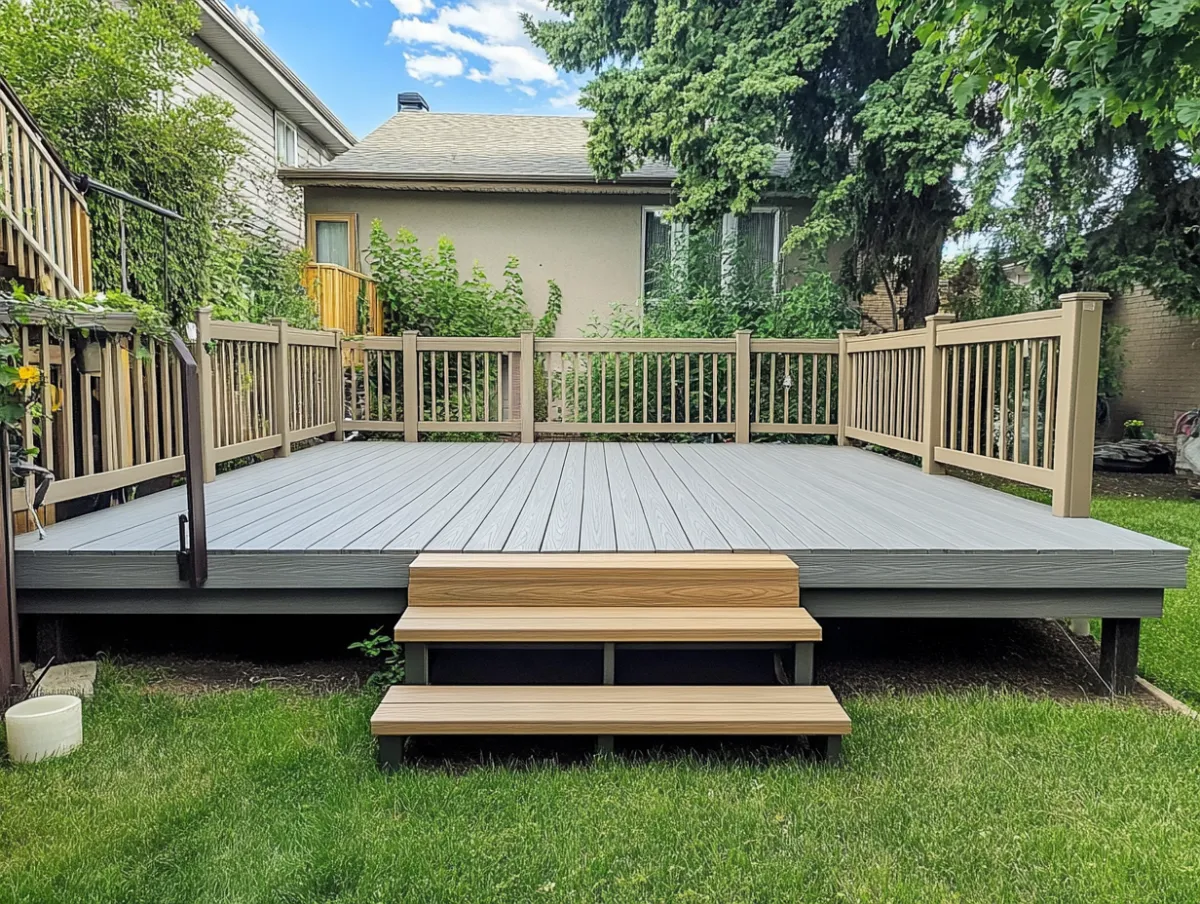
Our Deck Repair Process
- A full inspection. We check the decking, railings, stairs, joists, beams, posts, footings, and the ledger, probing for rot with a screwdriver as we go.
- A clear report. We show you what's failing, what's still sound, and what can wait.
- A written estimate with options, from targeted fixes to a larger repair.
- The repair. That might mean replacing damaged boards, sistering a new joist alongside a weak one, adding blocking, replacing corroded hangers, rebuilding stairs, or re-anchoring railing posts with through-bolts instead of the nails that let them loosen in the first place.
- Protection. On wood decks, we can add joist tape to shield the tops of the framing from water before new boards go down.
Most deck repairs take one to three days.
Repair or Rebuild: Which One Applies
Repair is the right call when the framing is mostly sound. Swapping out boards, tightening railings, rebuilding a set of stairs, or replacing a few joists can add years to a deck at a fraction of the cost of a new one.
A rebuild starts to make more sense when rot runs through many of the joists or beams, when the ledger has failed and damaged the house, or when the footings were never deep enough to begin with. At that point, new boards on old framing just hides the problem for a while.
Age matters too. A wood deck past 20 years, or one that's been patched again and again, usually doesn't have much left underneath. We'll tell you straight which side of the line your deck is on, and if it's a rebuild, we'll reuse whatever is still solid.
After a repair, a fresh coat of stain protects the new wood and the old, and our fence and deck staining service handles the cleaning, prep, and finish.