
Custom Deck Builders in Medford, Oregon
Wood and composite decks, built on solid footings and sized for how you'll actually use them.
A good deck changes how you use your house. In the Rogue Valley, that's most of the year, from spring evenings through the long dry summer and well into fall. But a deck is also a structure, and it has to hold a full crowd, a hot tub, or a heavy snow load from a rare cold snap without flexing. We build decks for homes all over the valley, from hillside lots in Jacksonville where the back of the house sits a full story off the ground, to flat backyards in Eagle Point where a simple low deck off the patio door is all you need. Every one starts the same way: with footings, framing, and fasteners chosen for the soil and the height, before anyone talks about board color.
Below, we cover how to know when a deck is the right project, what decking material fits your budget, how a deck build goes start to finish, and what permits Medford requires. It's the same set of questions we walk through with every homeowner on the first site visit, usually standing right where the deck will go. If you already have a deck that's showing its age, our deck repair page may be a better place to start.
Is a New Deck the Right Project?
A new deck usually makes sense in one of three situations. You have a patio door that steps down onto bare dirt or a cracked slab. You have an old deck that's past saving, with soft joists, loose posts, or a ledger pulling off the house. Or you want more usable outdoor space and your yard slopes too much for a patio.
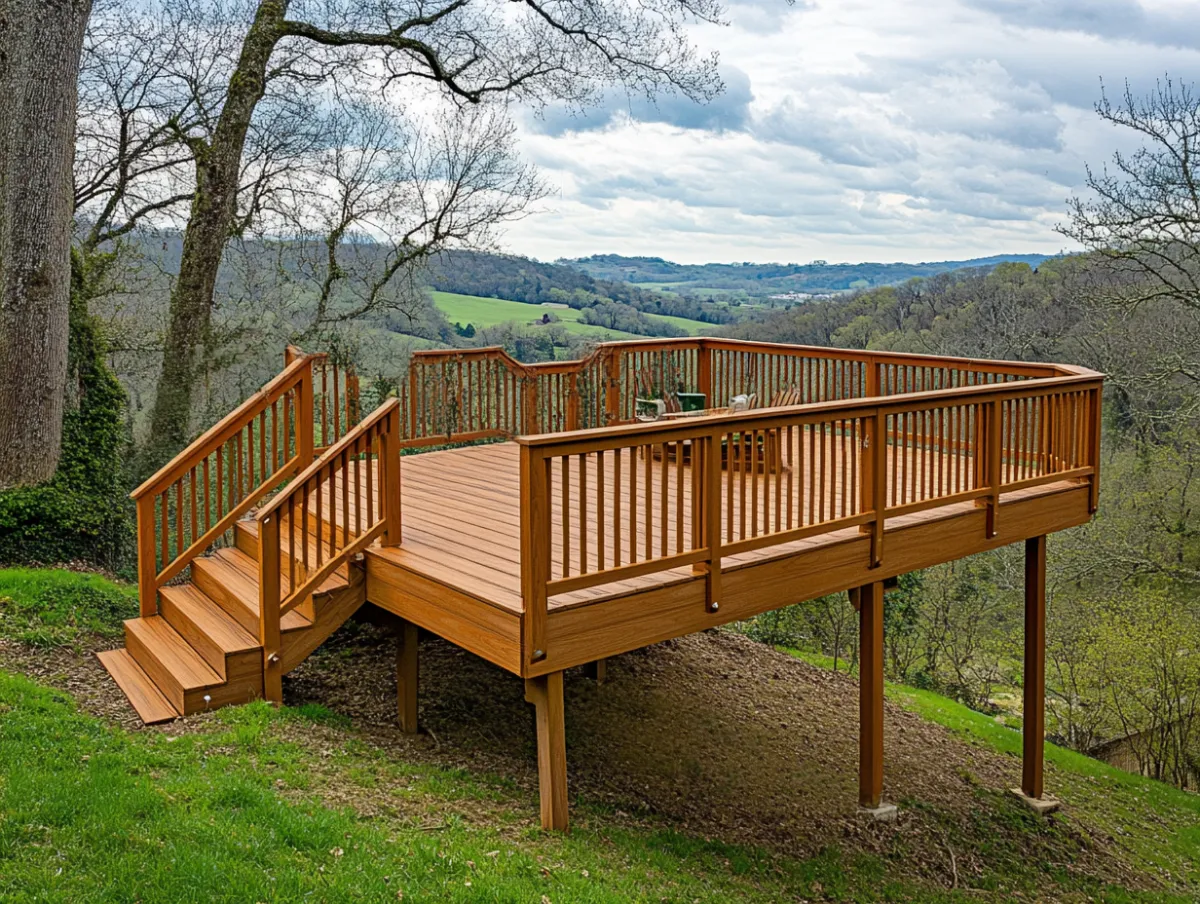
On a sloped lot, a deck is often the cheaper option. Leveling ground for a concrete patio means grading and retaining walls. A deck simply sits on posts set at different heights.
Size it for how you live. A table for six needs about 12 by 12 feet. Add a grill and a walkway and you're closer to 12 by 16. We'll mark it out in your yard with stakes and string so you can stand on the space, set a chair down, and see how it feels before anything is built.
Wood or Composite Decking
Pressure-treated lumber is the most affordable choice. It's strong and familiar, but it needs a fresh coat of stain or sealer every two to three years in this sun, or it grays, checks, and splinters.
Cedar costs more and looks warmer. It resists rot better than untreated wood but still needs regular sealing to hold its color.
Composite boards, made from wood fiber and plastic, cost the most up front. They don't need staining, won't splinter, and most major brands carry warranties of 25 years or more. The tradeoff is heat. Dark composite boards can get uncomfortably hot under bare feet on a 100 degree afternoon, so we usually steer people toward lighter colors here.
Whatever goes on top, the framing underneath is treated lumber either way. That's where a deck's lifespan is really decided.
How We Build Your Deck
- Site visit and layout. We measure, check the slope, and talk through size, height, stairs, and railings.
- Written estimate and drawings. You'll know the price, the materials, and the layout before you commit.
- Permits, when needed. We pull them and schedule the inspections.
- Footings and framing. Concrete footings below the soil line, posts, beams, and joists, typically at 16 inches apart. If the deck attaches to your house, the ledger board is bolted on and flashed so water can't get behind it, which is where many old decks rot first.
- Decking, stairs, and railings. Boards go down with hidden fasteners or coated screws, and railings go on at code height.
- Final walk-through and cleanup. We go over care and maintenance with you, and leftover material and scraps get hauled away.
A typical deck takes one to three weeks, depending on size and inspections.
Deck Permits in Medford
Not every deck needs a permit, but many do. In Medford, a building permit is required for any deck attached to the house, any deck more than 30 inches above the ground, any covered deck, and any deck over 300 square feet. A small freestanding deck that sits 30 inches or less off the ground is generally exempt.
Railings are required once a deck is more than 30 inches above grade, and the city checks guard height, baluster spacing, and stair dimensions at inspection, so it pays to build it right the first time.
Separate from the building permit, zoning setbacks and HOA rules may limit how close to the property line you can build. We check all of it before we finalize the design. A permitted deck also matters when you sell, since an unpermitted structure can come up during the buyer's inspection.
Once it's built, a good finish keeps it looking new, and our fence and deck staining service keeps wood decks protected through every summer.